
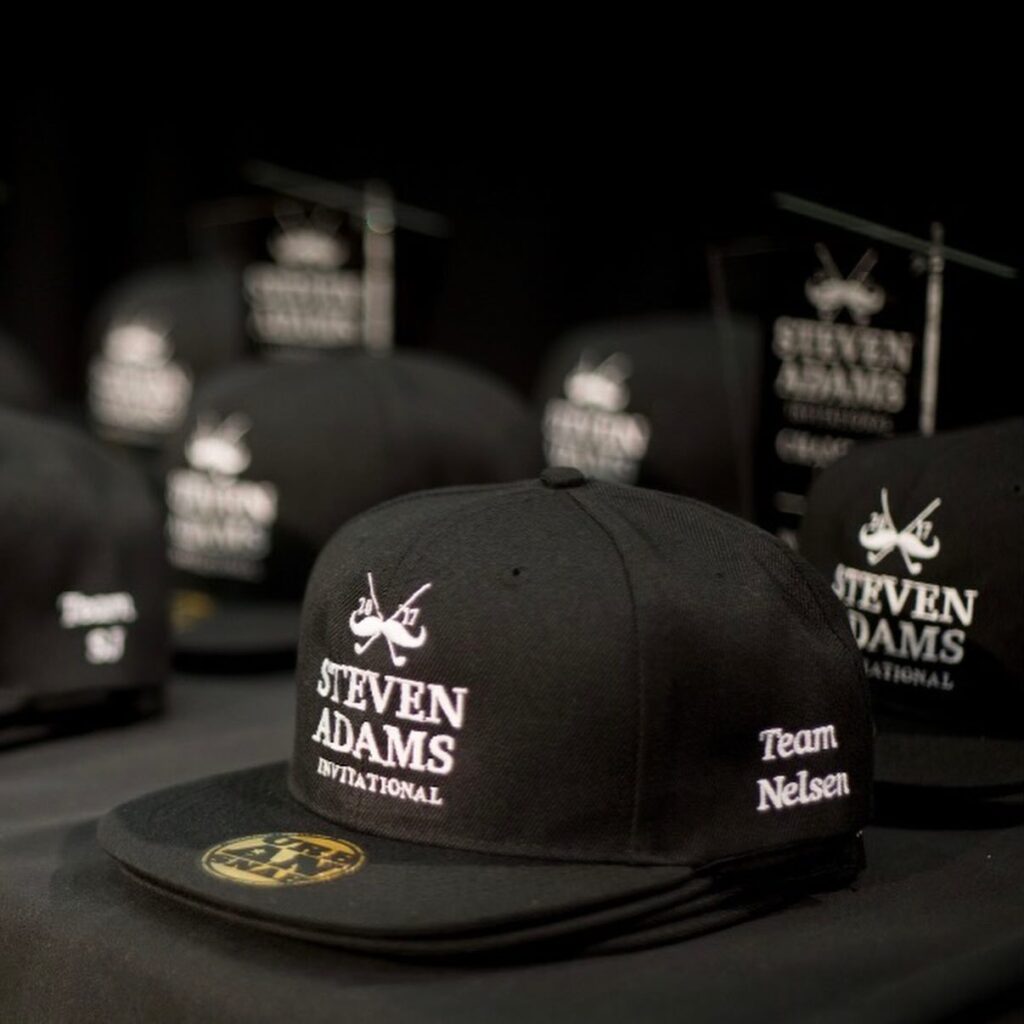
Every year, many NZ businesses order branded caps before a golf day, tote bags before an expo, and a box of pens before Christmas. Each order is fine on its own. String them together, though, and you’ll notice something missing: there’s no connective tissue, no logic running between them, no plan. It’s reactive spending dressed up as marketing, and it’s exactly what a proper brand merchandise strategy for NZ businesses is designed to fix.
Businesses that treat branded merchandise as a planned marketing channel, rather than a last-minute line item, get measurably more out of every dollar they spend. The product choices improve, the timing improves, and the outcomes become something you can actually track. That shift doesn’t happen by accident. It happens when there’s a strategy behind the spend.
At Withers & Co., we’ve spent more than 26 years helping NZ businesses make exactly that shift. We work from briefs, not catalogues, and we develop merch concepts that connect to goals rather than filling generic orders. This article walks you through a practical framework for building a brand merchandise strategy suited to the New Zealand context: from setting goals and choosing the right products, through to budgeting, sourcing, and measuring what actually matters.
Why most NZ businesses get merch backwards
The most common starting point for a merch order is the product itself. Someone says “we need pens for the conference” or “let’s get some tote bags for the market.” The goal, what the brand actually wants to achieve, comes second, if it comes at all. In our experience, this backwards approach is why so much branded merchandise ends up on tables uncollected, stuffed in a bag never opened, or filling a storeroom box alongside last year’s lanyards.
The result isn’t just waste. It’s missed opportunity. When the product is chosen before the goal is defined, you have no way of knowing whether the campaign worked, what you’d do differently next time, or whether the spend was justified at all. Low brand recall, poor ROI, and a growing pile of unloved promotional merchandise are the predictable outcomes.
A proper brand merchandise strategy NZ businesses can actually use flips that order. It starts with questions: who is this for, what behaviour do you want to drive, how does this item reinforce your brand message, and how will you know if it worked? Answer those questions before you open a catalogue, and every product decision that follows becomes cleaner, faster, and more effective. This is the foundation we work from with every client at Withers & Co., developing concepts from a brief rather than defaulting to what’s easy to stock.
Define your goals before you choose a single product
Branded merchandise can serve several distinct business objectives, and each one points to a different product type, budget level, and distribution method. Building broad awareness at a large event calls for something different than rewarding loyalty with a premium corporate gift, and both of those are different from boosting staff retention through a thoughtful onboarding kit. Trying to cover all those goals with one product is where budgets get wasted.
Map your merch to your business objective first. If the goal is trade show traffic, you want something attention-grabbing and low-cost enough to give freely. If the goal is client retention, you want something genuinely premium that signals care. If the goal is brand visibility at a festival, you want wearables people will actually put on. The goal shapes everything that follows.
Before briefing any supplier, agree on what success looks like. For brand awareness campaigns, the right KPI might be estimated impressions or brand recall. For corporate gifts NZ clients will genuinely value, look at repeat purchase rate or referral activity. For event giveaways, what some teams call promotional giveaways NZ-wide, track engagement directly: QR code scans, promo code redemptions, or landing-page visits attributed to the campaign. Having those KPIs locked in before the order goes out means you can evaluate the campaign with data, not just instinct.
How to choose branded merchandise your audience will actually use
The strongest-performing branded merchandise for NZ audiences in 2026 shares one quality: it’s genuinely useful. Reusable drink bottles, tote bags, quality notebooks, caps and beanies, and practical tech accessories like wireless chargers consistently outperform novelty items. People keep things they use. When they use them in public, your brand travels with them. That’s the whole model.
Eco-conscious products have moved well past “nice to have” for many NZ audiences. Items made from recycled materials, organic cotton, bamboo, or rPET carry real credibility, provided the quality holds up. Sustainable claims need to be backed by materials and certifications, not just marketing language. The certifications worth looking for include GOTS for organic textiles, FSC for paper and wood products, OEKO-TEX for chemical safety in fabrics, and OK Compost or AS 4736 for compostable items. Toitū carboNZero is the strongest local carbon certification signal, and Eco Choice Aotearoa is worth noting as a well-regarded NZ ecolabel across a broad range of product categories.
Matching product to audience
Corporate clients and marketing professionals respond to higher-value practical items: premium drinkware, leather folios, curated gift boxes. These signal that you’ve thought about what the recipient actually needs.
Event and festival audiences respond to wearables and reusables they can put to work on the day, branded apparel NZ crowds will actually wear, and bottles or bags that earn their keep long after the event.
Staff and onboarding audiences respond to items that feel personal rather than promotional: quality apparel, wellness gear, and branded swag NZ employees associate with company culture rather than a logo exercise.
Budget, lead times, and sourcing smartly in NZ
NZ-based suppliers typically deliver in 2, 10 working days, with minimum order quantities starting from around 6, 20 units depending on the product. The unit cost is higher than offshore alternatives, but the risk profile is lower: fewer surprises on freight, no customs clearance complexity, and easier quality control. For fast-turnaround or lower-quantity orders, NZ-sourced promotional products are usually the smarter choice.
Offshore sourcing drops the per-unit cost significantly at volume. In some product categories, the landed cost from offshore can be close to half the NZ wholesale price. But that saving comes with real trade-offs: sea-freight orders typically take 8, 16 weeks, MOQs are higher, and you need to account for customs clearance, GST, biosecurity requirements, and a longer cash cycle. The practical rule is straightforward: for repeat, high-volume products where you have the time to plan, offshore can make excellent sense; for anything time-sensitive or lower-quantity, NZ-sourced is the safer call.
Annual budget planning works best when you treat merchandise like any other marketing channel: set the envelope first, then break it into purpose-driven buckets. Common lines include:
- Product cost
- Customisation and branding
- Freight and fulfilment
- Storage
- A contingency buffer for rush orders or reprints
Timing the spend around NZ-specific peaks, Q4 client gifting, summer event season, staff recognition moments across the year, means you’re rarely rushing, and rushed orders almost always cost more and produce worse results.
Measure whether your merch strategy NZ is actually working
Promotional merchandise works across the full marketing funnel, so your measurement should too. At the top of the funnel, track brand impressions and recall: how often is the item used, and does the recipient associate it with your brand? This is where items like branded apparel worn in public or a reusable bottle on a desk deliver repeated exposure that many paid advertising channels struggle to match at the same cost per impression.
Mid-funnel, track engagement directly through QR code scans, promo code redemptions, event check-ins, or website visits attributed to the campaign. At the bottom of the funnel, look at conversion rate, customer acquisition cost, and retention lift (whether recipients buy again or stay longer than comparable non-recipients over a 6, 12 month window).
For financial benchmarking, the most widely cited targets for branded merchandise campaigns are a 5:1 return (500% ROI) as strong performance and 10:1 or better as exceptional. These are achievable when merchandise is paired with a clear goal, the right product, and a tracking mechanism. Cost per impression is a useful companion metric, particularly for wearable items: divide your total campaign spend by estimated impressions to compare the efficiency of merch against paid channels. Well-run merch campaigns often compare favourably once you factor in the repeated exposure that a single ad placement can’t deliver.
Build a plan, not just an order
The businesses that get the most from their brand merchandise strategy NZ-wide treat it exactly like they treat any other marketing channel: planned in advance, budgeted deliberately, and reviewed after each campaign. That means building a merch calendar that accounts for NZ-specific seasons and business rhythms rather than reacting to them when they arrive. It means knowing in July what you’ll be gifting in December, and knowing in February what you’ll be distributing at the March trade show.
Working ahead also opens the creative space that reactive ordering closes. When you’re not rushing, you can brief a supplier properly, explore product options, review samples, and make decisions based on quality rather than what’s available fast. At that point, branded merchandise earns its place as a genuine brand asset rather than a commodity line item.
Most promotional product suppliers process orders. Withers & Co. works differently: we take a brief, develop concepts that fit your brand, your audience, and your goals, and then help you build a programme rather than a one-off transaction. With more than 26 years serving NZ businesses and a strong track record reflected in our 5-star Google Reviews, we bring the kind of hands-on knowledge that shortens lead times, reduces costly mistakes, and helps your merch budget compound over time. Talk to us about your brand merchandise strategy NZ, if you’re ready to move beyond reactive orders, we’re the starting point worth contacting.
The framework in short
Start with goals, not products. Know your audience well enough to choose items they’ll actually keep and use. Plan your sourcing around NZ realities: NZ-based for speed and flexibility, offshore for high-volume repeat items when the timeline allows. Back sustainability claims with real certifications and materials rather than marketing language. Measure with KPIs you agreed on before the order went out, not after you’re hoping it worked.
The mindset shift matters as much as the framework. Merchandise isn’t a last-minute line item, it’s a brand touchpoint that either earns its place in someone’s daily life or quietly disappears. The difference between those two outcomes is almost always whether there was a strategy behind it.
A brand merchandise strategy NZ businesses can sustain doesn’t need to be complicated. It needs to be intentional, and when it is, the repeated brand exposure it generates is something a single campaign or reactive order rarely achieves.

