
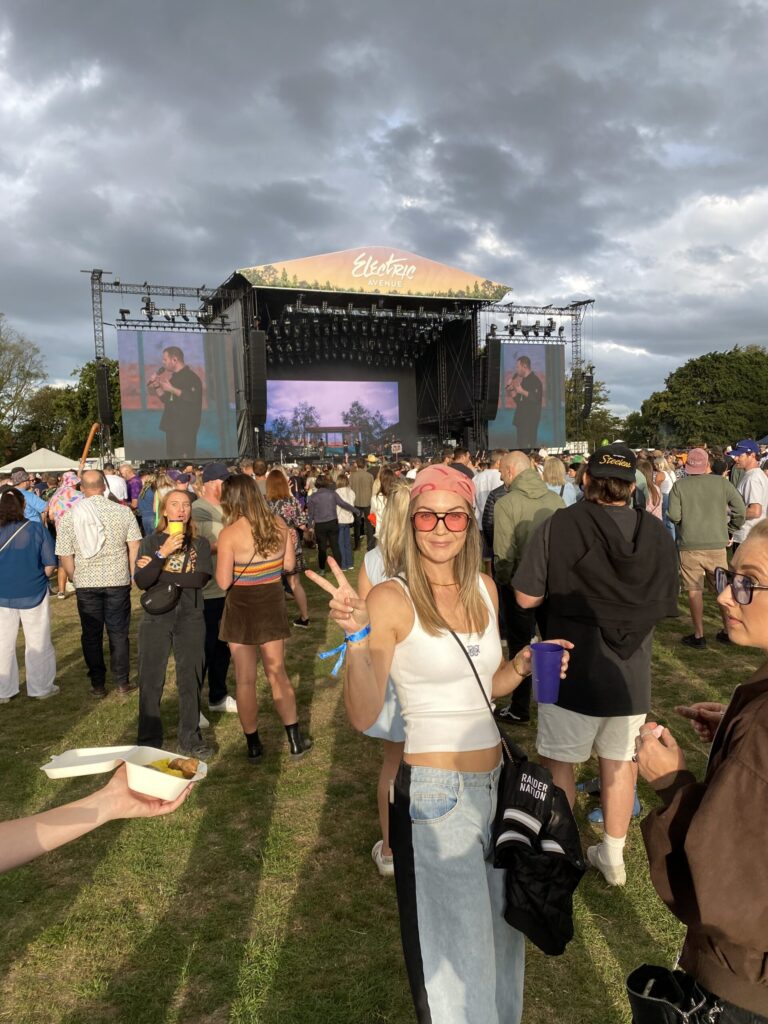
Picture this: you’ve ordered 300 branded pens for a summer festival, they arrive on time, and by 11am they’re sitting in an untouched pile at the corner of your table. Meanwhile, the stall next to you is giving away caps and people are putting them on before they’ve even walked away. Wrong merch for the wrong event isn’t just a wasted budget, it’s a missed opportunity to put your brand in front of hundreds or thousands of people for weeks after the day itself.
The question most NZ event teams get wrong isn’t “how much should we spend?” It’s “what will people actually use?” At Withers & Co., we’ve been answering that question for NZ festivals and corporate events for over 26 years, and the answer always starts in the same place: understanding your audience before you choose a product.
This guide breaks down which merchandise categories deliver real engagement and long-term brand visibility across NZ festivals and corporate events, with practical guidance on budgets, quantities, and lead times so you can brief your supplier with confidence.
Why your event type should drive every merch decision
Festival attendees and conference delegates are in completely different headspaces, and the merch that works for one will often fall flat with the other. At a summer music festival, people are in a sensory, social, emotionally charged environment. They want items that solve an immediate need, shade, hydration, or somewhere to carry their gear, or items that serve as a souvenir of the experience. At a corporate conference, delegates are in a professional mindset. They respond to items that signal quality, sit usefully on their desk or in their bag, and reflect well on the brand that gave them.
A useful framework for evaluating any merch item is to ask whether it offers immediate utility (used on the day), daily utility (used for weeks or months after), or collectible value (kept for emotional reasons). The best event merch ticks at least two of those boxes. A branded stainless steel drink bottle at a festival ticks all three. A branded pen typically ticks none.
Apparel and headwear: wearable merch that keeps working long after the event
Caps are one of the most effective festival merch items available, and the reason is straightforward: they solve a real, immediate problem. At an outdoor summer event in New Zealand, a branded cap goes from a giveaway item to a functional necessity within minutes of arrival. People put them on and don’t take them off, which means your logo is moving around the event all day and going home with them afterwards. Felt-patch caps, camo styles, and earthy tones are driving strong demand in 2026, with typical price ranges sitting between $10 and $25 depending on quality and decoration method. MOQs generally start at 25 to 50 units, making caps viable even for smaller events.
Apparel earns its place in a merch range when there’s genuine emotional connection attached to it, festival pride, team identity, or an event brand people actually want to be associated with. The critical factor is quality: soft-washed fabrics, quality prints, and considered design are what separate a hoodie that gets worn for years from one that ends up folded at the bottom of a drawer after two washes. Oversized and vintage-inspired fits are performing well in 2026, and limited-edition design approaches increase the perceived collectibility of apparel significantly. Hoodies generate some of the highest lifetime brand impressions of any merch category, but only when the quality justifies keeping them.
Drinkware and bags: the workhorses of any event merch range
Stainless steel drink bottles are among the most consistently ordered merchandise items in New Zealand, and that position hasn’t shifted. NZ’s strong eco-conscious values, combined with the steady move away from single-use plastics at events, have made branded drink bottles an obvious choice for festival organisers. At events with refill stations, a branded bottle gets used constantly throughout the day and then heads home to a kitchen bench or desk, prime brand real estate. Pricing ranges from around $10 for standard options to $50 or more for premium insulated designs, with BPA-free and double-walled stainless options performing particularly well with environmentally aware audiences.
Tote bags have moved from “generic freebie” to one of the fastest-growing categories in NZ merchandise, driven largely by changing consumer expectations around single-use plastic. At a festival, a tote is immediately functional: people use it to carry purchases, giveaways, and personal items throughout the day. At a corporate event, a well-made tote becomes a daily bag for the commute or the office. Research from the Advertising Specialty Institute suggests a branded bag can generate thousands of impressions over its lifetime, making it one of the stronger cost-per-impression options in the entire category. Basic options can come in under $10, and even premium organic cotton versions are accessible at scale.
Tech accessories and practical add-ons that win at corporate events
At multi-session conferences and full-day corporate events, phone battery anxiety is a genuine, shared experience. A branded power bank solves it directly and visibly, which is why this category consistently delivers high perceived value in the corporate merch space. Recipients immediately understand what the item is worth, and that creates a positive association with your brand at the exact moment they need help. Power banks typically sit in the $25 to $50+ range and are best suited to higher-tier gifting, VIP attendee bags, or curated swag packs rather than mass giveaways. They resonate particularly well with Auckland and Wellington corporate audiences where content creation and constant connectivity are part of the working day.
Recycled notebooks and bamboo pens are the underrated performers at NZ workshops, professional development events, and client briefings. They combine genuine practical value with a sustainability signal that aligns with how many NZ businesses want to be seen. These items work especially well when paired with a branded drinkware item in a cohesive swag bag, creating what effectively functions as a branded desk kit that sits in plain view every working day. The combination of daily utility and environmental credibility makes eco stationery a smarter choice than most event organisers give it credit for.
Budgets, order quantities, and lead times: what to plan before you commit
Having a realistic sense of category pricing before you approach a supplier saves time and avoids the disappointment of falling in love with a product that doesn’t fit your budget. As a practical reference: tote bags start under $10 for basic options; caps and t-shirts typically sit in the $10 to $25 range; drinkware spans $10 to $50 depending on quality tier; and tech accessories like power banks generally start at $25 and climb from there. Most categories have MOQs starting at 25 units, with meaningful price breaks at 50, 100, 250, and 500 units. If you’re ordering for a large festival, the per-unit savings at 500+ units can significantly change what’s possible within your budget.
Sustainable alternatives, including organic cotton apparel, recycled bags, and hemp caps, typically cost 10 to 30% more than conventional equivalents. That premium is worth paying when your audience notices and respects it: B2B crowds, values-aligned festivals, and certification-conscious brands all fit that profile. For high-volume, lower-engagement giveaways where quality scrutiny is lower, the conventional option may serve you just as well. Local NZ production can reduce the cost gap by cutting import shipping and also shortens your lead time. Most NZ suppliers need five to eight working days post-proof approval for standard orders, so build that into your event planning timeline early. Complex or multi-process jobs will take longer, and rushing a print job rarely ends well.
How to choose the right NZ merch partner for your event
Most event organisers follow the same process: contact a supplier, browse a catalogue, pick items, and hope everything arrives on time and on-brand. The better approach is to work with an agency that understands your event, your audience, and your brand, and brings ideas to the table rather than just processing a product list. A solid merch brief should cover your event type and date, your audience profile, how the merch will be distributed (giveaway, swag bag, sold on-site, or gifted to VIPs), quantity, budget, and any sustainability requirements. The more context you provide upfront, the better the result.
Withers & Co. has spent over 26 years developing event and festival merchandise for New Zealand businesses. The approach is deliberately different from a standard catalogue supplier: the team works from client briefs to develop concepts that fit the event, the audience, and the brand, rather than simply fulfilling stock orders. Specialised ranges for festivals, corporate events, golf days, and social sports markets mean the product knowledge runs deep. That experience, combined with a consistent track record of reliable delivery and quality, is what sets Withers & Co. apart for NZ event organisers.
Getting the right merch is a strategic decision, not just a product one
The best branded merchandise at NZ festivals and corporate events shares three qualities: it solves a real need in the moment, it’s useful enough to keep, and it reflects well on the brand behind it. Whether you’re ordering 50 caps for a corporate golf day or 500 tote bags for a summer festival, the framework stays the same. Start with your audience’s mindset, choose items that earn their place through utility or emotional connection, and work with a supplier who understands what “event-ready” actually means in New Zealand.
If you’re planning your next event merch order, get in touch with the team at Withers & Co. Getting the category right is only half the job. The other half is working with someone who can bring the right idea to the brief, deliver it on time, and make your brand look good doing it.

