
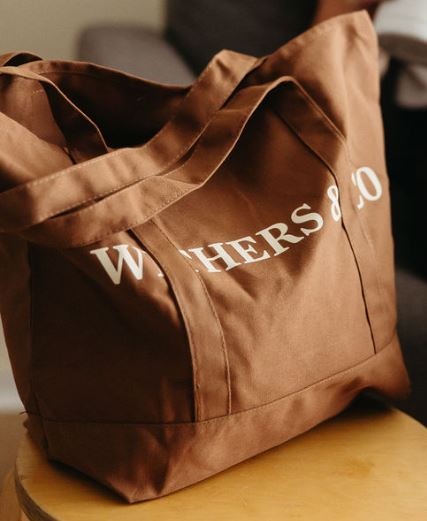
The freebie era of promotional merchandise is ending. For years the promo model was simple: get your logo on the cheapest possible item and hand out as many as you can. That model is now working against brands rather than for them. A 2019 Global Ad Impressions Study found branded promotional items are kept for an average of just one year, with 23 percent thrown away outright, and the promotional products industry in the United States alone is worth well over 24 billion dollars, meaning a significant volume of that spend is heading straight to landfill.
The shift underway is not really about swapping a plastic pen for a bamboo one. It is a shift from disposable branding to considered branding, where the item itself has to earn its place in someone’s home or office.
Why disposable merch has stopped working
The economics of giveaway culture never really added up from a sustainability standpoint. A widely cited Fast Company piece on conference swag put it bluntly: tote bags, pens, and tech accessories are often produced cheaply overseas, used briefly, and discarded, with the marketing benefit fading long before the item does. Multiply that across every conference booth, sponsorship activation, and staff welcome pack, and the waste adds up fast.
The response from procurement teams and marketers has been to ask a different question before ordering. Not “how many can we afford” but “will this actually get used.”
The Greenwashing Trap
As sustainability has become a genuine purchase driver, so has the temptation to slap an eco label on anything and call it a day. This is worth taking seriously, because it can backfire. Consumer NZ’s head of research and advocacy told The Spinoff that vague terms like eco, green, and natural are proliferating across shelves in New Zealand without any regulatory backing, and that shoppers are increasingly unable to tell which claims are genuine and which are marketing spin. The same scrutiny is now extending into corporate gifting and merchandise, where a recycled logo tote with no real material transparency behind it does more reputational harm than good.
The practical takeaway for anyone choosing branded merch is to look for specifics. What percentage is recycled. Whether it is pre or post consumer material. Whether a biodegradable claim comes with an actual composting standard attached. Vague adjectives are a red flag, not a selling point.
Eco decoration methods actually matter
The decoration method matters as much as the base product. Embroidery generally has a lighter environmental footprint than large scale print runs, since it does not rely on plastic based inks or heat transfer vinyl, and it tends to outlast print decoration significantly on apparel, which matters because durability is itself a sustainability factor. Screen printing sits in the middle depending on ink type, with water based and discharge inks being considerably less harmful than PVC based plastisol. Digital and DTG printing can be efficient for small runs and reduce setup waste, though ink composition still varies by supplier.
None of these methods are inherently green or not green. What matters is asking your supplier what inks and processes they use, and whether the decoration will hold up long enough that the item stays in use rather than in a drawer.
Recycled and natural materials worth knowing
Recycled cotton, recycled polyester (typically derived from PET bottles), organic cotton, cork, and natural fibres like jute and bamboo have all become mainstream options in promotional ranges over the past two years, alongside a broader move toward FSC certified paper and card packaging. The textile side of this deserves particular attention. Textile waste is a genuinely large scale environmental problem, and the industry’s own circularity claims have not always held up. A recent BCG report found that in 2024 roughly 80 percent of discarded clothing ended up in landfill or incinerators globally, with far less than one percent actually recycled into new fibres, underlining why durability and reuse matter more than a recycled content percentage on its own.
This is the same logic that applies to branded apparel and textile merchandise. A recycled polyester t-shirt that gets worn twice and binned has a worse footprint than a well made, conventional cotton polo that gets worn for three years.
Choosing merch people actually keep
The single biggest lever for sustainable merch is not material, it is usefulness. Drinkware, quality notebooks, apparel people would genuinely wear, and desk accessories consistently outperform novelty items on retention, because they slot into a habit the recipient already has. A branded item that replaces a disposable one in someone’s routine, like a reusable coffee cup swapped in for takeaway cups, does more good than an item made from recycled material that never leaves the box it came in.
This is also where boutique sourcing has a real advantage over high volume catalogue suppliers. When merch is selected item by item for a client’s audience rather than picked from a generic bulk SKU list, it is far easier to prioritise both quality and genuine environmental credentials, rather than defaulting to whatever is cheapest to produce at scale.
The bottom line for 2026
Sustainable merch in 2026 is not a marketing add-on, it is a baseline expectation, and the brands getting it right are the ones being specific rather than performative. Fewer items, better materials, honest claims, and decoration methods chosen deliberately rather than by default. Get those right and the sustainability story tells itself, without needing an eco label to do the talking.
Sources referenced: Fast Company (conference swag economics), The Spinoff (greenwashing in NZ), and a BCG textile waste report via Sustainability Magazine.

