
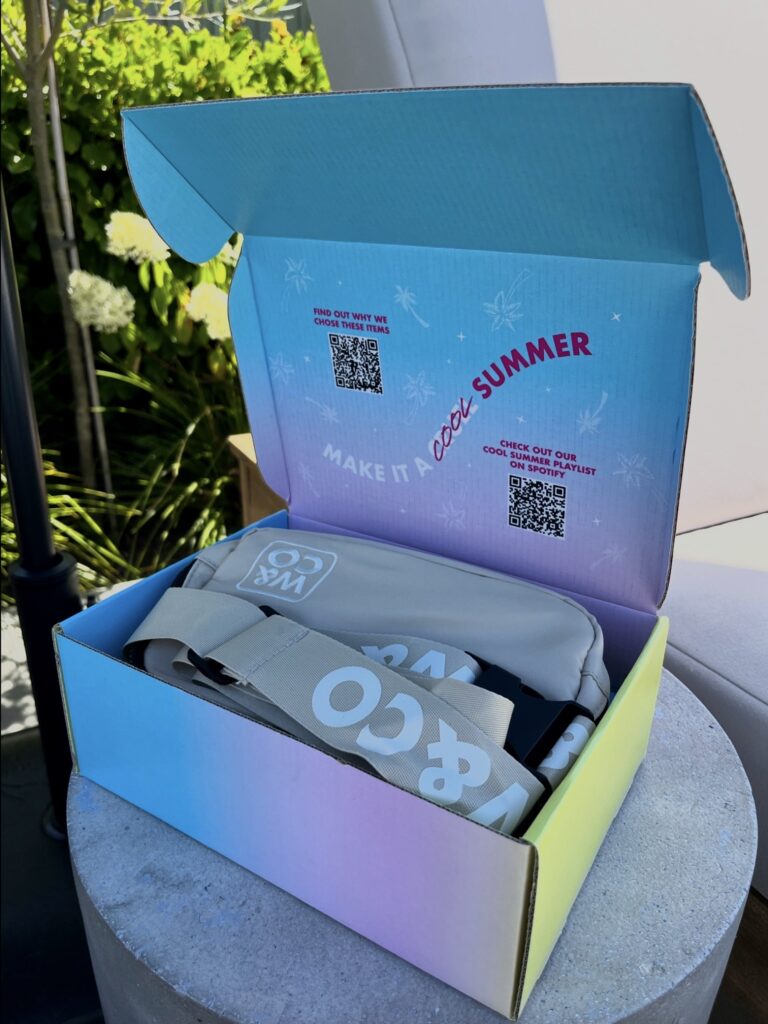
Yes, but only when the kit is timed to arrive before or on the first day and feels prepared for that specific person rather than pulled from a generic supply cupboard. Research on onboarding consistently shows that a strong first experience is one of the clearest levers a business has over early staff turnover, and a well designed welcome kit is part of that experience. A late kit, or one that feels like leftover branded stock, has been shown to produce almost no measurable benefit at all.
What the research actually says
The numbers get thrown around a lot in HR marketing, so it is worth separating the well sourced findings from the vague ones.
Gallup and Glassdoor research on onboarding quality points to structured onboarding programmes lifting new hire retention by around 82 percent compared to unstructured onboarding. Separate research from Jobvite has found that close to one in three employees leave a job within their first 90 days, and that early departures are often tied to a lack of connection and unclear cultural signals rather than the role itself. Gartner has also reported that a strong onboarding experience can increase an employee’s discretionary effort, the willingness to go beyond the minimum, by around 20 percent.
The most useful recent data point is less flattering to the swag industry itself. Custom Ink commissioned research into onboarding kits specifically and found that a large majority of HR teams are not confident their onboarding swag is actually working, and that new hires report barely noticing a difference between a kit that arrives late and no kit at all. That finding matters more than the retention percentages above. It tells you the mechanism only works if the timing and thought behind the kit are right. A branded hoodie that turns up three weeks into the job, after the new hire has already formed their opinion of the place, is not doing the job it was bought to do.
SHRM’s commonly cited figure for the cost of replacing an employee sits between 50 and 200 percent of that person’s annual salary, depending on seniority and how specialised the role is. Framed against that number, even a premium onboarding kit is a modest line item if it meaningfully reduces early departures across a hiring cohort.
Kit versus swag, and why the distinction matters
There is a useful distinction that has emerged in the HR and gifting research between an onboarding gift and company swag. Swag is branded merchandise built to promote the company outward, useful at trade shows and client events. An onboarding gift is built to make one specific person feel prepared for and welcomed, with the branding as a secondary element rather than the point.
The two overlap well when a single quality branded item, a decent quarter zip or a proper drink bottle rather than a throwaway pen, sits inside a kit that otherwise feels personal. Where it goes wrong is when the entire onboarding gesture is a box of leftover conference tee shirts. New hires notice the difference between a kit assembled for them and stock cleared out of a cupboard, and the research above suggests they respond to that difference in how long they stay.
What tends to go into a kit that actually gets used
Programmes that report the strongest results tend to build kits in tiers rather than a single fixed package, since the right kit for a warehouse hire looks different to the right kit for a graduate office starter. A workable starting structure is a basic kit covering the practical first day items, a standard kit adding one or two quality wearable pieces and a drink bottle, and a premium kit reserved for senior hires or harder to fill roles, often including a handwritten note or a small personalised touch such as the employee’s name on an item rather than just the company logo.
Items that get reported back as genuinely used, rather than left in a drawer, tend to be things the person would have bought for themselves anyway: a good notebook, a proper insulated bottle, decent headphones or a well made bag. Items that get recycled fastest tend to be low quality apparel in the wrong size or generic desk clutter with no daily use.
What buyers should ask a supplier before committing to an onboarding programme
Timing capability matters more than product selection for this category specifically, given the Custom Ink finding above. Ask whether a supplier can guarantee delivery to a new hire’s home address before their first day, particularly for remote or hybrid starters, and how they handle urgent or last minute hires where HR only gets a start date a few days out.
Ask about minimum order quantities and whether individual kits can be personalised at low volume, since onboarding is naturally a rolling, one or two people at a time order rather than a bulk run. A supplier still thinking in pallet quantities is often the wrong fit for a programme that needs to ship a single kit on short notice most weeks of the year.
Ask for real examples of tiered kit programmes the supplier has actually run, not just a catalogue of items that could theoretically go in a box. The difference between a kit that lifts retention and one that gets tossed in a drawer usually comes down to curation and timing, and that is a service question as much as a product one.
Related reading
For businesses weighing up whether to build this kind of programme in house or work with an agency, our post on in-house sourcing versus outsourcing covers the trade-offs in more depth. For a look at how tiered pricing typically works across kit sizes and volumes, see our pricing and product tier overview.

